
A Foreigner's Guide to Korean Jjimjilbang & Spas in Busan
A first-timer's guide to Korean jjimjilbang culture in Busan, from how to use Spa Land at Shinsegae Centum City to bathhouse etiquette and tattoo policies.
Korean jjimjilbang/spa culture isn’t just a bathhouse — it’s a whole leisure complex with saunas, hot baths, lounge areas, and even restaurants. It can feel unfamiliar the first time, but knowing a few basics beforehand turns it into one of the most memorable local experiences of a Busan trip.
Spa Land (Shinsegae Centum City) — the easiest place to start
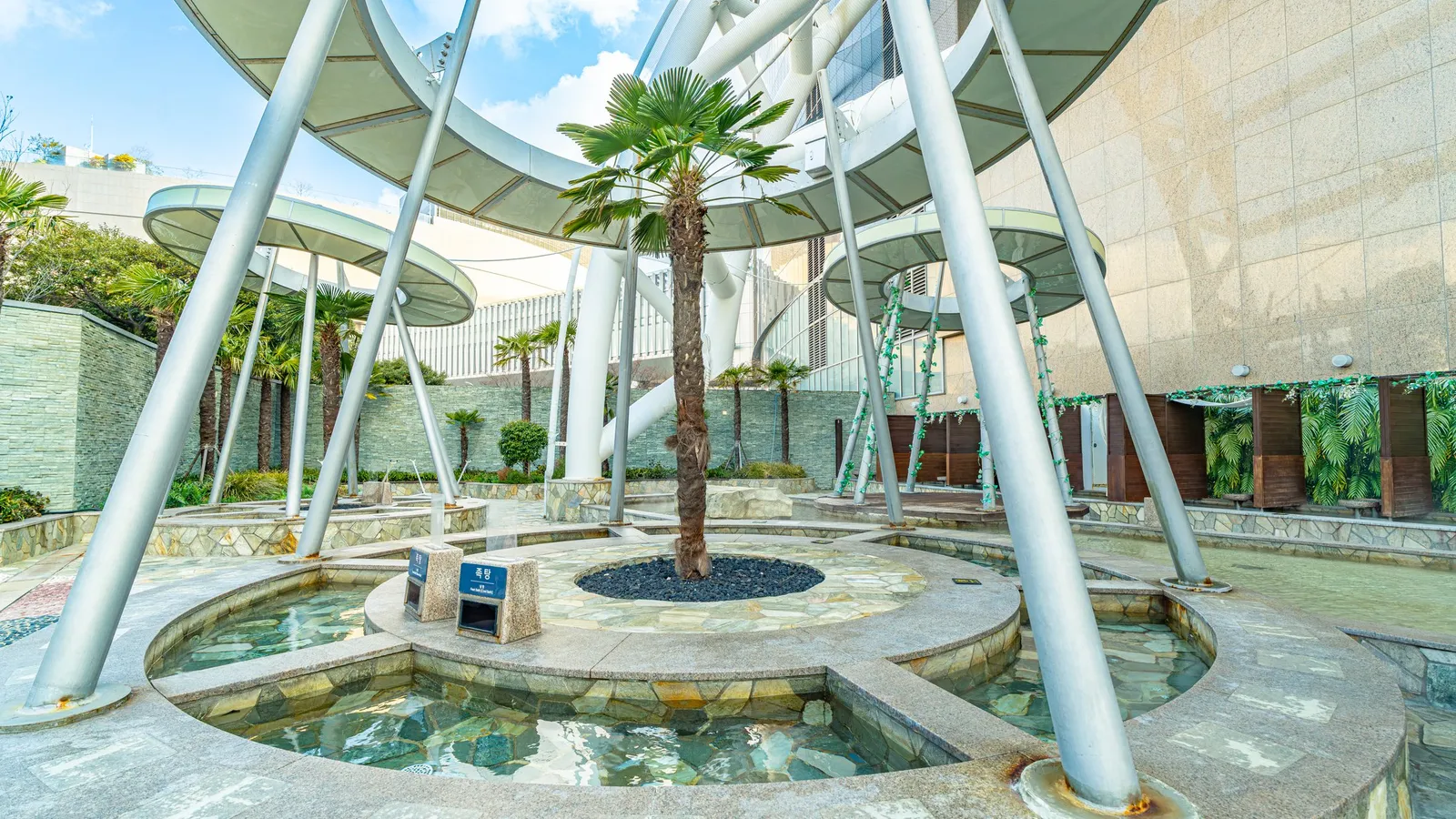
A large spa and jjimjilbang facility in the basement of the Shinsegae Department Store Centum City branch in Haeundae-gu, with a range of themed saunas and an outdoor foot bath. Being attached to a department store makes it easy to reach, and it has relatively solid English signage, making it the most approachable option for foreign visitors. 📍 View on map →
Spa Land Centum City Admission Ticket
Buying online via KKday in advance lets you skip the counter line and walk right in
 KKday
KKday Klook
KlookEtiquette Worth Knowing
- The bathhouse is fully nude: The bathhouse (tang) area is gender-separated and entered without clothing. It can feel awkward the first time, but it’s completely normal for locals.
- Wash before you get in the water: The basic rule is to shower and soap up at an individual shower stall before entering any of the tubs.
- Sauna clothes are provided by the facility: After bathing, you change into the sauna uniform provided by the facility to move into the jjimjilbang (lounge) area, which is mixed-gender.
- Tie back long hair: A basic courtesy is to keep hair from touching the water in the tubs.
Cost and Hours
It varies by facility, but a large spa typically costs somewhere around US$12-20 for entry and lets you stay half a day or more. Many operate 24 hours, and some travelers use a jjimjilbang as an overnight stay in a pinch, but booking a proper place to sleep is the safer bet for planning purposes.
What to Eat at a Jjimjilbang
The first time I went to a jjimjilbang, I figured it was just a sauna — I had no idea there’d be an entire food counter inside. But wander around in your sauna uniform for a while and you’ll end up in line for it like everyone else.
The first thing to grab is sikhye (₩3,000-4,000), a sweet rice punch. Sweating it out in the heat and then drinking a cold sikhye afterward is basically an unwritten rule of jjimjilbang life — skip it and you’ll feel like you missed something. Next up: maekbansuk eggs (roughly ₩500-1,000 each), eggs roasted pressed against a hot stone slab, which is why the shells come out with a distinctive blotchy pattern — that pattern is actually how you tell they’re the real deal. There’s something oddly satisfying about cracking one open and seeing the pattern stuck to the shell.
Once you’re hungry for something more, order grilled squid (₩8,000-12,000), ramyeon (₩4,000-5,000), or dumplings. Ramyeon broth tastes noticeably better after sweating it out in a sauna — I don’t think that’s just in my head. Hours vary by facility, though — if you’re visiting late at night, some places only serve the snack items (sikhye, eggs) rather than the full menu.
What to Try
The most fun part of a jjimjilbang is working your way through the themed saunas one by one. Larger facilities typically have a lineup like this:
- Ocher (hwangto) room: Gently warm with an earthy smell — the easiest one to start with
- Salt room: Coarse salt covering the floor and walls, with intense heat
- Charcoal room: Marketed for its purifying, odor-absorbing charcoal, with a faint woody smell
- Ice room: A cold room to cool off after sweating in the other saunas — everyone lets out an “oh” the moment they walk in
Once you’ve made the rounds, it’s worth trying a body scrub (seshin). It felt strange the first time — handing your body over to a stranger is an odd feeling — but it turned out to be more invigorating than painful. Full-body scrubs run around ₩25,000, back-only around ₩15,000. You usually sign up directly with the scrub attendant inside the bathhouse or at the counter; larger facilities also take advance bookings. If you’re nervous about your first time, you can just ask them to go easy — no need to overthink it.
A jjimjilbang isn’t only for bathing and sweating, either — there’s usually a sleeping room for a nap, and some facilities even have a comic book room or PC room. If you want to make the most of a half-day visit, try the sequence: bathhouse → saunas → food counter → sleeping room.
Price Comparison: Large Spa vs. Neighborhood Jjimjilbang
| Item | Large spa (Spa Land basis) | Neighborhood jjimjilbang |
|---|---|---|
| Entry fee | ~₩15,000-25,000 | ~₩8,000-12,000 |
| Body scrub (seshin) | Sign up separately, ~₩25,000 (full body) | Sign up separately, ~₩20,000-25,000 (full body) |
| Themed saunas | 5+ types (ocher, salt, ice, etc.) | Usually 1-2 types |
| Foreigner-friendliness | English signage, QR-code booking | Mostly Korean-only |
| Food counter | Full menu, open until late | Limited menu, hours vary |
Related Guides
If you’re curious about other things to do indoors on a rainy day, see our Rainy Day Indoor Activities in Busan guide. For what to pack by season, check our Busan weather and packing guide.
📌 One last thing before you book: before booking flights, hotels, or tour tickets, check our latest discount codes for anything you can use.
Some links in this article are affiliate links. If you complete a booking through them, we may earn a commission at no extra cost to you. See our affiliate disclosure for details.
Frequently Asked Questions
What's the difference between a jjimjilbang and a spa?
The bathhouse (daeyokjang) is gender-separated and used without clothing. A jjimjilbang is the clothed, mixed-gender lounge and sauna area you move to after bathing — the two are often part of the same facility.
Can I go in if I have tattoos?
Policy varies by facility. Large facilities like Spa Land generally allow small tattoos, but larger ones may need to be covered with waterproof tape. Checking the facility's website or calling ahead is the safest bet.
Can I wear a swimsuit in the bathhouse?
No — the bathhouse (tang) is used completely nude, and swimsuits aren't allowed there. If the facility has a separate water-park-style area, that's where swimwear is worn.
Does the body scrub (seshin) hurt?
It's more invigorating than painful — think brisk, not sore. Since it's exfoliating dead skin, sensitive skin might feel a light sting, but most travelers find it completely tolerable. If it's your first time, you can always ask the scrub attendant to go easy.
How much can I eat inside a jjimjilbang?
The in-house food counter usually has set hours (typically from morning until late at night), but simple snacks like sikhye and maekbansuk eggs are often available 24 hours. For actual meals (ramyeon, dumplings), it's worth checking the food counter's operating hours.
💰 Check before you book
Before you go, check the latest KKday discount codes — one code can shave a meaningful amount off your booking.
See the latest discount codes →💡 Some links on this page are affiliate links. If you complete a booking through them, we may earn a commission at no extra cost to you. Affiliate Disclosure