
Gyeongju Day Trip from Busan 2026: Autumn Foliage & Ginkgo Itinerary, Bus Transport, Schedule
Travel from Busan's Nopo Bus Terminal to Gyeongju in about 50 minutes for ₩7,700 on a premium (udeung) express bus. Here is the complete guide to the estimated peak autumn foliage at Bulguksa (불국사) and the Tongiljeon Ginkgo Tree Road (통일전 은행나무길) in 2026, a 1-day self-guided itinerary, opening hours, admission fees, and how to choose between independent travel and a day tour.
Last updated: · Busan Bible Editorial Team (based in Busan)
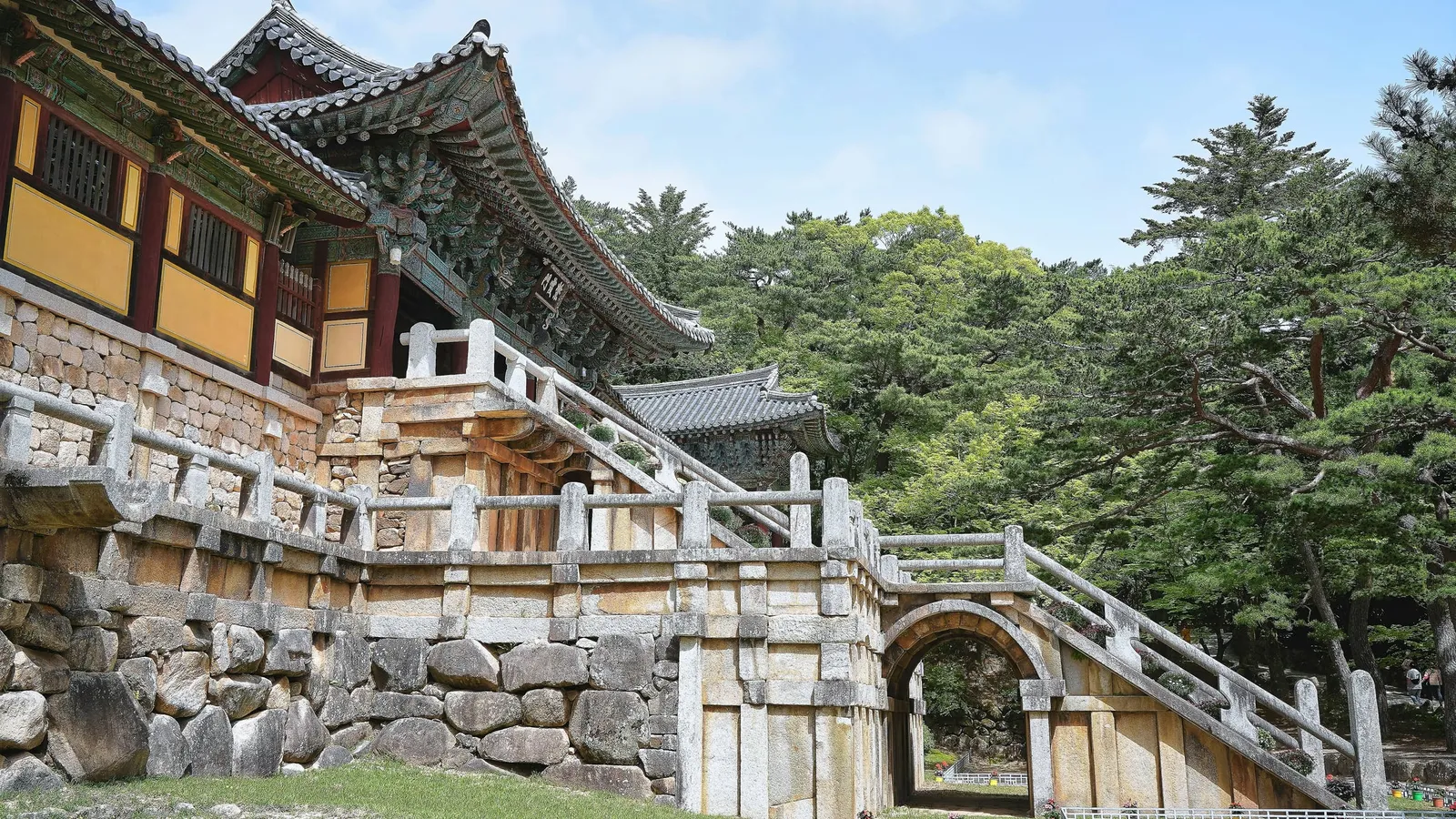
Gyeongju, the thousand-year capital of the Silla Kingdom, is only about a 50-minute ride from Busan, making it the most popular day trip destination from the city. Autumn in Gyeongju is especially worthwhile: the crimson foliage at Bulguksa (불국사), the roughly 2-kilometer Tongiljeon Ginkgo Tree Road (통일전 은행나무길), and the evening illumination reflecting over the water at Donggung Palace and Wolji Pond (동궁과 월지)—allowing you to take in historic temples, golden foliage, and stunning night views all in a single day.
⚡ Quick Summary (Updated October 11, 2026): Taking an intercity bus from Busan Central Bus Terminal (부산종합버스터미널, Nopo Station / 노포역 on Metro Line 1) to Gyeongju takes about 50 minutes, costing ₩7,700 on a premium (udeung) express bus. The estimated peak autumn foliage for the Gyeongsang region in 2026 is from early to mid-November; visiting both Bulguksa (불국사) and the Tongiljeon Ginkgo Tree Road (통일전 은행나무길) together is best timed during the 1st to 2nd week of November. Bulguksa (불국사) and Seokguram (석굴암) are free; Donggung Palace and Wolji Pond (동궁과 월지) costs ₩3,000 for adults and is open until 22:00. If you prefer not to transfer between local buses, consider joining a Gyeongju day tour from Busan.
When to Visit? 2026 Autumn Forecast
| Attraction | Estimated Best Time | Basis / Source |
|---|---|---|
| Bulguksa (불국사) foliage | Around early November to Nov 10 | Unofficial foliage map estimates; forecasts vary by up to two weeks |
| Tongiljeon Ginkgo Tree Road (통일전 은행나무길) | Early to mid-November | Gyeongju City tourism website: foliage turns yellow from late October to early November |
| Gyeongsang Region overall | Early to mid-November | Korea Tourism Organization & Korea National Arboretum “2026 Autumn Foliage Map” |
Actual foliage timing varies depending on temperatures. If your itinerary is scheduled for late October, leaves at Bulguksa (불국사) may just be starting to turn red while the ginkgo trees remain mostly green. After mid-November, mountain leaves begin to fall, though city ginkgo trees usually still retain their colors. For autumn foliage timing within Busan, check our Busan Autumn Foliage Guide.
How to Get to Gyeongju from Busan?
| Method | Departure Point | Travel Time | Cost | Best For |
|---|---|---|---|---|
| Intercity Bus (Recommended) | Busan Central Bus Terminal (부산종합버스터미널 / Nopo Station 노포역) | Approx. 50 minutes | Premium (udeung) ₩7,700 | Direct to downtown Gyeongju; smoothest transfers to attractions |
| Intercity Bus | Busan Seobu Intercity Bus Terminal (Sasang Station / 사상역) | Approx. 1 hour 7 minutes | Premium (udeung) ₩9,500 | Staying in Sasang or west of Seomyeon |
| KTX | Busan Station → Gyeongju Station | Approx. 30 minutes | Refer to official Korail website | Travelers holding a KTX pass or transferring by bus from Gyeongju Station |
| Day Tour | Pickup in central Busan | Full day | From approx. US$45 per person | First-time visitors; those who prefer not to transfer |
- Why the bus is the smoothest option: Gyeongju Intercity Bus Terminal is located right in the city center, with buses directly to Bulguksa (불국사) stopping nearby, and Daereungwon (대릉원) and Hwangridan-gil (황리단길) are within walking distance.
- KTX requires factoring in transfer time: Gyeongju Station is situated outside the city center. Local bus connections to Bulguksa (불국사) are infrequent and subject to road traffic, so the total travel time is not necessarily faster than taking the bus.
- The first bus departs at 06:20, running every 20–40 minutes thereafter. Weekend morning departures fill up quickly, so check seat availability in advance via the Korean intercity bus booking website or app the day before.
- For booking KTX/SRT tickets and onward travel to Seoul, see Busan to Gyeongju & Seoul: how to get there.
1-Day Self-Guided Itinerary (Autumn Edition)
| Time | Itinerary | Tips |
|---|---|---|
| 08:00 | Depart by bus from Nopo Station (노포역) | Terminal station of Metro Line 1; bus terminal is directly connected to the subway station |
| 08:50 | Arrive at Gyeongju Intercity Bus Terminal, transfer to local bus to Bulguksa (불국사) | Travel time approx. 40 minutes, may take longer on weekends |
| 09:40 | Bulguksa (불국사) (approx. 1.5 hours) | Free admission; add approx. 1.5 hours if visiting Seokguram (석굴암) |
| 11:30 | Take a taxi to Tongiljeon Ginkgo Tree Road (통일전 은행나무길) | Approx. 15 minutes; the ginkgo road is approx. 2 km long and open 24 hours |
| 13:00 | Lunch and coffee at Hwangridan-gil (황리단길) | Traditional hanok alleyway lined with restaurants and cafés |
| 14:30 | Daereungwon (대릉원) and Cheomseongdae (첨성대) | Ancient Silla royal tomb complex, easily walkable within the city center |
| 17:00 | Sunset and illumination at Donggung Palace and Wolji Pond (동궁과 월지) | Sunset in November is around 17:20; the nighttime illumination reflections are most beautiful |
| 19:00 | Return to Gyeongju Intercity Bus Terminal to catch the bus back to Busan | Confirm the last bus schedule before setting off |
If time is tight, skip Seokguram (석굴암) and replace Tongiljeon with the autumn foliage around Daereungwon (대릉원) to still enjoy the seasonal colors.
Main Attractions: Opening Hours & Admission
Bulguksa (불국사) & Seokguram (석굴암)
A Buddhist temple from the Silla Dynasty, designated as a UNESCO World Heritage site alongside Seokguram (석굴암). Since May 2023, South Korea abolished admission fees for state-designated cultural heritage temples, making both sites currently free to enter. Seokguram is located on Tohamsan (토함산) mountain and can be reached by taking Bus No. 12 from Bulguksa. The Gyeongju City tourism website lists Seokguram’s hours as 9:00–17:30 in October, and winter hours starting in November as 9:00–17:00, subject to on-site adjustments.
Tongiljeon Ginkgo Tree Road (통일전 은행나무길)
A roughly 2-kilometer stretch of ginkgo trees lining both sides of the main approach road to Tongiljeon turns brilliant golden-yellow in autumn. The path is open 24 hours with free admission, making it Gyeongju’s most popular autumn photo spot. The least crowded time to visit is weekday mornings.
Daereungwon (대릉원), Cheomseongdae (첨성대) & Hwangridan-gil (황리단길)
Daereungwon is an ancient royal burial complex of the Silla Kingdom, whose mounded grassy tumuli form an iconic symbol of Gyeongju; adjacent Cheomseongdae is one of the oldest surviving astronomical observatories in East Asia. Located right next to Daereungwon, Hwangridan-gil is an atmospheric alley lined with hanok houses converted into restaurants, cafés, and boutique shops, making it an ideal midday rest stop.
Donggung Palace and Wolji Pond (동궁과 월지 / Anapji)
The secondary palace compound and artificial pond of the Silla Kingdom royal court. In the evening, illuminated pavilions reflect across the water’s surface, creating Gyeongju’s most famous night view. Open 9:00–22:00 (ticketing and last entry at 21:30); admission is ₩3,000 for adults, ₩2,000 for youths, and ₩1,000 for children (youth and child ticket prices vary slightly across sources; refer to the on-site ticket office).
Independent Travel vs. Joining a Day Tour
| Independent Travel | Day Tour | |
|---|---|---|
| Cost | Transport approx. ₩20,000–30,000 (round-trip bus + local bus/taxi) | From approx. US$45 per person, including transport |
| Flexibility | Stay longer at the ginkgo road or for night views | Fixed schedule, limited time at each site |
| Hassle | Must check bus routes and wait; traffic around Bulguksa on weekends | Board transport directly at meeting point |
| Best For | Travelers who prefer unhurried photography or night views | First-time visitors, families with seniors or children |
If you prefer not to figure out transit transfers, you can look directly into day tours departing from Busan; compare prices and attraction differences across three popular routes in our Gyeongju Day Tour Comparison.
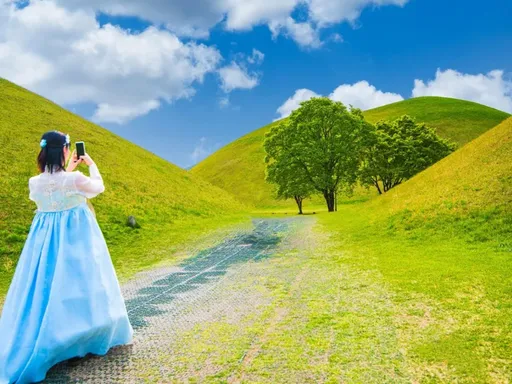
Gyeongju UNESCO World Heritage Day Tour (From Busan)
Cover classic historic sights including Bulguksa and Daereungwon in one day with round-trip transport; the top choice during the autumn foliage season.
 See price & reviews
 See price & reviews
Tips Before You Go
- Clothing: In November, temperatures in Gyeongju drop to around 5–10°C in the mornings and evenings, noticeably colder than coastal Busan. Bring a warm jacket.
- Weekend Traffic: During the peak foliage season, buses around Bulguksa (불국사) often get stuck in traffic on weekends; visit on a weekday if possible.
- Return Trip: If you want to see the night views at Donggung Palace and Wolji Pond (동궁과 월지) before heading back to Busan, check the last bus departure from Gyeongju to Nopo (노포역) before setting out.
- Maps: For bus routes in Gyeongju, Naver Map provides the most accurate directions, as Google Maps has incomplete transit information. Check our guide on Essential Travel Apps for Korea.
Related Articles
- Tongdosa Temple Day Trip from Busan: Bus from Nopo, Free Entry
- Busan Autumn Foliage Guide: Foliage Forecast & 8 Top Spots
- How Many Days to Spend in Busan: Itinerary & Duration Guide
- Where to Stay in Busan: Complete Neighborhood Guide
📌 Final Check Before Booking: Before purchasing day tour tickets, be sure to check our Busan Discount Codes Roundup to see if applicable coupons are available.
This article contains affiliate links. Booking through these links comes at no extra cost to you, but we may earn a small commission to support website operations. See our Affiliate Disclosure for details.
Frequently Asked Questions
How long does it take from Busan to Gyeongju, and what is the most convenient way to get there?
The most convenient way is taking an intercity bus from Busan Central Bus Terminal (부산종합버스터미널, connected to Nopo Station / 노포역 on Metro Line 1) to Gyeongju Intercity Bus Terminal (경주시외버스터미널). It takes about 50 minutes and costs ₩7,700 for an premium (udeung) express bus. The first bus departs at 06:20, running every 20–40 minutes thereafter. Taking the KTX from Busan Station to Gyeongju Station (formerly Singyeongju) takes about 30 minutes, but Gyeongju Station is located outside the city center and requires a local bus transfer, so the total travel time to downtown attractions is not necessarily faster than the bus. The same KTX station outside the city center was renamed on December 28, 2023; the old downtown Gyeongju station is closed.
When are the autumn leaves and ginkgo trees most beautiful in Gyeongju in 2026?
The 2026 foliage map by the Korea Tourism Organization and the Korea National Arboretum forecasts the peak in the Gyeongsang region to occur from early to mid-November. The Gyeongju City tourism website notes that the Tongiljeon Ginkgo Tree Road (통일전 은행나무길) turns yellow from late October to early November, with recent years peaking around early to mid-November. Unofficial foliage forecasts for Bulguksa (불국사) predict early November to around November 10, though estimates can vary by up to two weeks, so check the latest conditions before departing.
Do Bulguksa Temple and Seokguram Grotto require admission tickets?
No. Since May 2023, South Korea abolished admission fees for state-designated cultural heritage temples, so admission to Bulguksa (불국사) and Seokguram (석굴암) is currently free. Donggung Palace and Wolji Pond (동궁과 월지 / Anapji) still charges admission: ₩3,000 for adults, open until 22:00 (ticketing and last entry close at 21:30).
Is it better to travel independently or join a day tour to Gyeongju?
If you want to take your time photographing the ginkgo trees and stay late for the night views of Donggung Palace and Wolji Pond (동궁과 월지), independent travel offers greater flexibility. If it is your first visit, you prefer not to navigate local bus schedules, or you are concerned about weekend traffic around Bulguksa (불국사), joining a day tour from Busan is much more hassle-free with direct transportation between attractions.
Can you see Gyeongju in one day?
Yes, you can cover the main attractions in one day: Bulguksa (불국사) in the morning (add about 1.5 hours for Seokguram / 석굴암), Tongiljeon Ginkgo Tree Road (통일전 은행나무길) around midday, Daereungwon (대릉원), Cheomseongdae (첨성대), and Hwangridan-gil (황리단길) in the afternoon, followed by the evening illumination at Donggung Palace and Wolji Pond (동궁과 월지) before taking the bus back to Busan. If you plan to visit Yangdong Village (양동마을) or bike around Bomun Lake (보문호), an extra day is recommended.
💰 Check before you book
Before you go, check the latest KKday discount codes — one code can shave a meaningful amount off your booking.
See the latest discount codes →💡 Some links on this page are affiliate links. If you complete a booking through them, we may earn a commission at no extra cost to you. Affiliate Disclosure